Introduction
NASA's Transiting Exoplanet Survey Satellite (TESS) has revolutionized our search for worlds beyond our solar system. While its primary method—detecting the faint dimming of a star as a planet crosses in front of it—has yielded thousands of candidates, TESS also observes another cosmic dance: binary star systems where two stars periodically eclipse each other. A powerful new study now demonstrates that by precisely timing these stellar eclipses, astronomers can uncover exoplanets that would otherwise remain hidden. This approach has already identified more than two dozen candidate exoplanets, offering fresh insights into planet formation in complex gravitational environments.
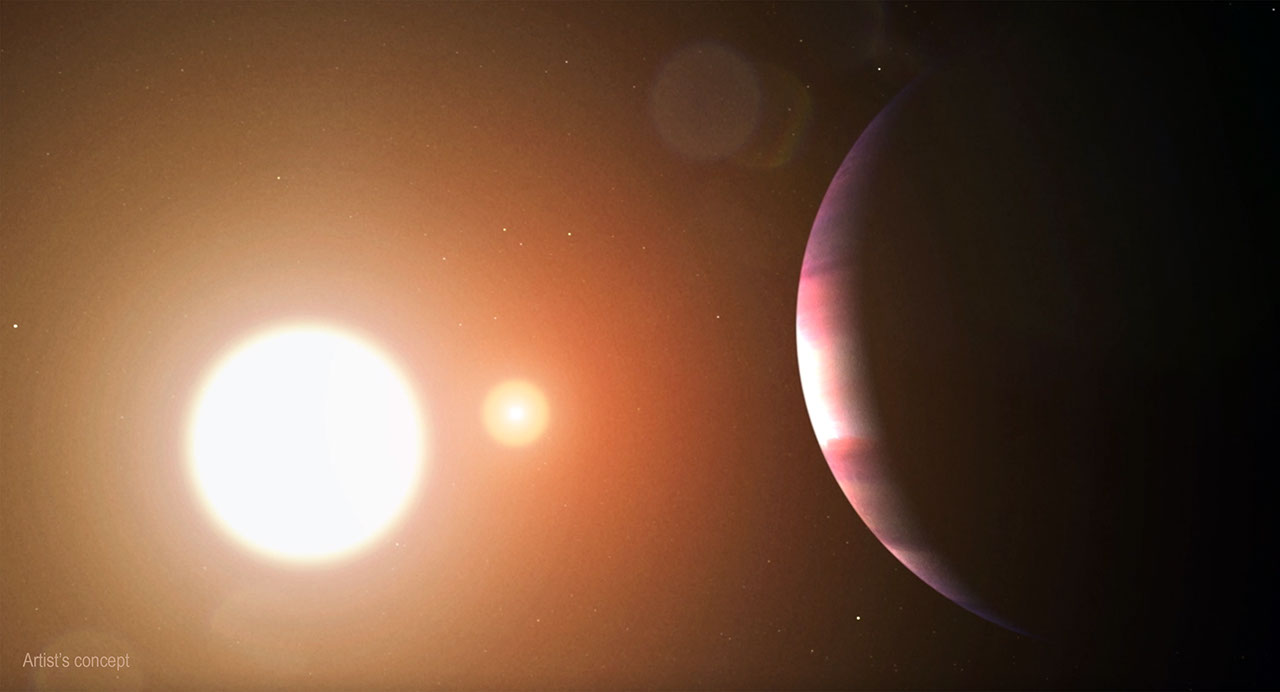
The Challenge of Finding Planets in Binary Star Systems
Binary star systems—pairs of stars bound by gravity—are common in our galaxy, yet detecting planets around them is notoriously difficult. The standard transit method requires a planet to cross directly in front of its host star from Earth's viewpoint. In binary systems, the orientation of a planet's orbit can vary widely, making such alignments rare. To date, NASA's retired Kepler mission and other observatories had confirmed just 16 transiting exoplanets in binary systems, while TESS had added two more. The new study, led by Margo Thornton, a doctoral candidate at UNSW Sydney, set out to change that.
Limitations of the Traditional Transit Method
Transits produce regular, small dips in a star's brightness—a method that has worked brilliantly for single-star systems. However, in a binary system, the presence of a second star can complicate light curves, making it challenging to distinguish a planetary transit from other stellar activity. Moreover, the planet's orbital plane must be nearly edge-on to our line of sight, an alignment that is statistically unlikely for many binary configurations.
A New Approach: Timing Stellar Eclipses
Instead of relying solely on transits, Thornton and her team turned to the precise timing of stellar eclipses. When two stars in a binary system orbit each other, they alternately eclipse one another from our perspective. The exact moments of these eclipses can shift slightly due to gravitational tugs from unseen companions—such as planets. By carefully measuring the timing of many eclipses over time, astronomers can detect the subtle influence of an exoplanet. This method, known as eclipse timing variation (ETV), is not limited by the orientation of the planet's orbit, opening a new window for discovery.
Key Findings from the Study
Applying ETV to TESS data, the team identified more than two dozen candidate exoplanets in binary systems—a significant leap from the previous count. According to the paper published May 4 in the Monthly Notices of the Royal Astronomical Society, these candidates represent worlds that TESS could not have found through transits alone. The study underscores the value of revisiting existing data with novel techniques.
What Planetary Orbits Tell Us About Formation
The orientation of a planet's orbit in a binary system offers clues about its formation history. Some models suggest that planets tend to form in the same plane as the binary stars, which would make transiting worlds more common. Other models propose a more chaotic process, where gravitational interactions between the two stars stir young planets into wider, more tilted orbits—greatly reducing the chance of transits. By comparing the numbers of planets found via transit and ETV methods, astronomers can test these competing theories. Thornton noted, Identifying transits in binary systems clearly is challenging, but we'd like to know more about the range of planets that can form around two gravitationally bound stars.
Future Prospects and Significance
This new approach not only expands TESS's exoplanet catalog but also complements ongoing missions like the James Webb Space Telescope, which can characterize atmospheres of nearby worlds. As more binary systems are analyzed, scientists hope to refine models of planet formation and uncover the diversity of planetary systems in our galaxy. The study also highlights the dynamic nature of eclipsing binaries, where factors such as tidal interactions, stellar rotation, and general relativity can further influence eclipse timings—effects that must be disentangled from planetary signals.
Conclusion
By harnessing the power of stellar eclipses, TESS has unlocked a hidden population of exoplanets in binary star systems. This innovative method broadens our view of where and how planets can exist, paving the way for future discoveries. With 885 confirmed exoplanets and over 7,900 candidates already identified, TESS continues to redefine our understanding of the cosmos—one eclipse at a time.