Imagine a star that suddenly flares up, brightening by a factor of a million, mimicking a supernova—but then, surprisingly, it doesn't die. Astronomers call these events supernova impostors, and they represent one of the most perplexing phenomena in stellar astrophysics: eruptive mass loss. Unlike true supernovae that destroy the star, impostors survive, shedding enormous amounts of material in violent outbursts. Despite decades of study, the underlying physical triggers remain poorly understood. Below, we answer key questions about these cosmic conundrums.
What exactly are supernova impostors and why do they confuse astronomers?
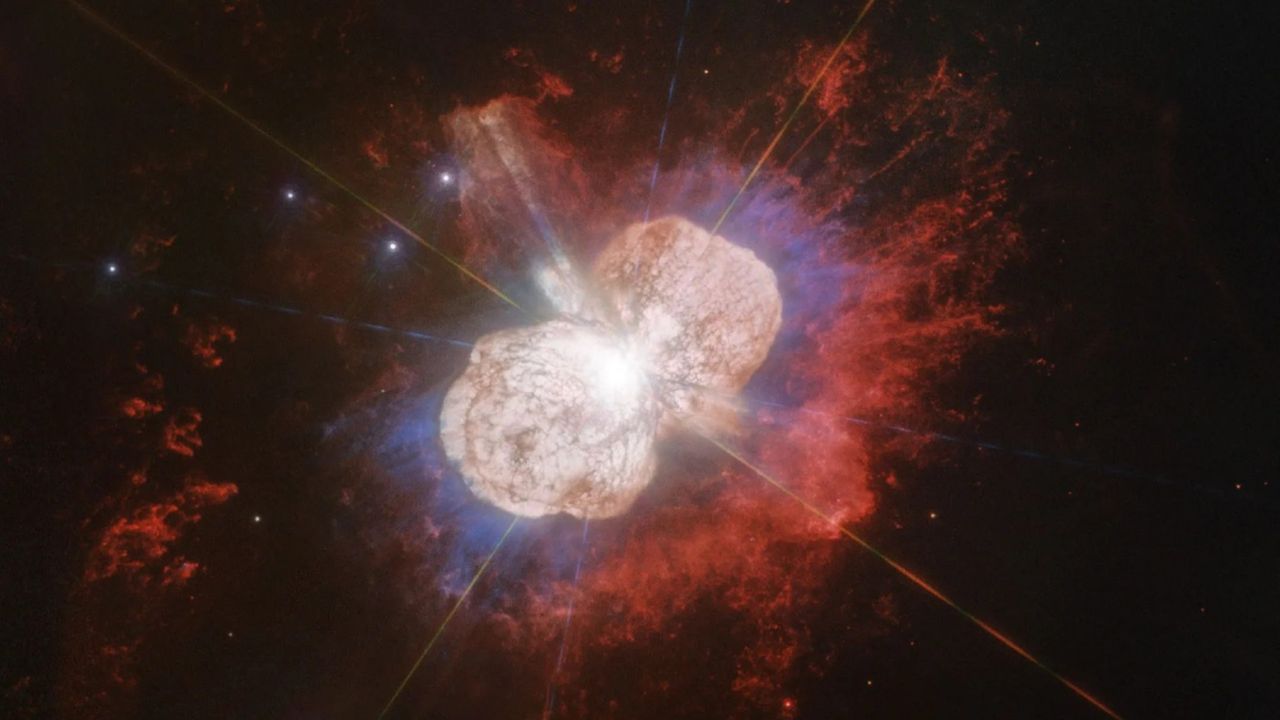
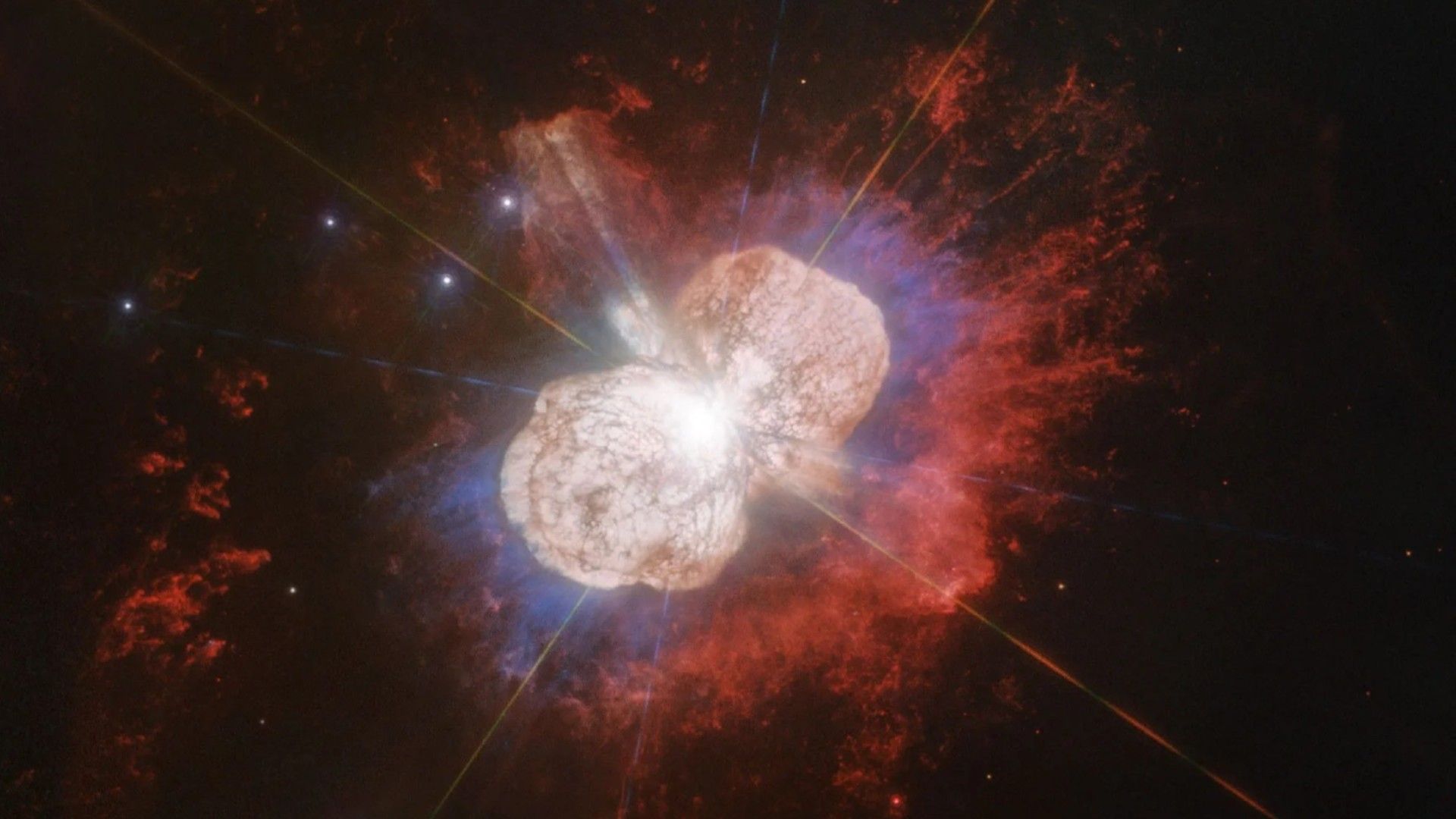
Supernova impostors are stellar eruptions that look remarkably like a supernova explosion—they can brighten by a factor of a million or more—but the star survives the event. This defies the classic supernova narrative, where a star is completely destroyed. Astronomers are confused because these outbursts can eject as much mass as a true supernova (up to several solar masses), yet the core remains intact. The light curve and spectral signatures often mimic a Type IIn supernova, which is typically caused by a massive star exploding into dense circumstellar material. However, in impostors, the star re-emerges after the outburst, sometimes even repeating the process years later. The most famous examples include Eta Carinae’s Great Eruption in the 19th century and SN 2009ip, which first appeared as an impostor before later becoming a real supernova. The confusion arises because we lack a clear model to explain how a star can rid itself of so much mass without dying.
How does eruptive mass loss differ from a typical supernova explosion?
In a typical core-collapse supernova, the star’s iron core collapses into a neutron star or black hole, releasing a shockwave that tears the star apart. The entire star is disrupted, and the explosion fades over weeks to months, leaving behind a compact remnant and an expanding nebula. Eruptive mass loss, by contrast, is a non-terminal event: the star violently ejects its outer layers but does not undergo core collapse. The mechanism is thought to involve instabilities in the star’s interior, such as extreme radiation pressure, pulsational pair-instability, or a sudden increase in nuclear burning. Unlike a supernova, the star remains gravitationally bound and can continue evolving. The ejected material forms a dense, expanding shell that collides with previously ejected gas, causing the bright emission. Astronomers often detect these impostors in the same star years or decades later, confirming the star’s survival. The key difference: supernovae kill the star; impostors are a massive, but survivable, tantrum.
Which types of stars are most likely to experience these dramatic eruptions?
Supernova impostors are most commonly observed in very massive, luminous stars—those with initial masses above 40–50 solar masses. These include Luminous Blue Variables (LBVs) like Eta Carinae, and some Wolf-Rayet stars. Such stars live fast and die young, often undergoing extreme mass loss due to their high luminosity approaching the Eddington limit (where radiation pressure nearly balances gravity). LBVs are known for sporadic eruptions, which can be mistaken for supernovae when observed in distant galaxies. However, some impostors have also been seen in less massive red supergiants, suggesting the phenomenon may be broader. The common factor is that the star is on the verge of instability, either because it is nearing the end of its nuclear fusion life or because it has reached a structural tipping point. Recent surveys indicate that impostors might be more common than previously thought, but their rarity—only a few dozen known—makes it hard to pin down exactly which stars are prone to such eruptions.
What have astronomers observed about the mechanisms behind these stellar outbursts?
Observational evidence points to multiple possible mechanisms. One leading candidate is the pulsational pair-instability process, where the star’s core becomes hot enough to create electron-positron pairs, reducing internal pressure and causing a partial collapse followed by violent nuclear burning. This can eject the outer layers without destroying the star. Another idea invokes binary interaction: a massive star in a close binary system may transfer material to its companion, leading to sudden unstable mass loss. In some cases, such as SN 2009ip, the impostor outburst was followed years later by a true supernova, suggesting that the eruption altered the star’s structure enough to trigger a final collapse. Spectroscopic observations show broad emission lines from hydrogen and helium, with complex velocity structures indicating multiple shells of ejected material. Time-domain astronomy, especially with all-sky surveys like ZTF and LSST, has allowed astronomers to catch these events early and trace their evolution in detail. However, direct imaging of the surviving star after the outburst is challenging due to the surrounding debris.
Why is it still so difficult to predict when a star will undergo eruptive mass loss?
Predicting eruptive mass loss is hard because the internal conditions that trigger an outburst are extremely complex and not well understood. The star’s evolutionary state—its mass, rotation, metallicity, and magnetic fields—all play a role. Theoretical models struggle to reproduce the immense energy and mass loss observed in impostors without causing the star to disintegrate. Another challenge is observational bias: we only see these events when they happen, and we rarely have pre-eruption data to constrain the star’s properties. The timescales are also problematic—massive stars can live for millions of years, but each star may only undergo a few eruptions in its lifetime. With only a handful of well-studied cases, statistical models are unreliable. Moreover, the mechanism may vary from star to star; some impostors might be caused by binary mergers, others by single-star instabilities. Future observations with high-resolution spectroscopy and multi-wavelength campaigns, combined with advanced 3D hydrodynamics simulations, will be essential to improve our predictive ability. Until then, supernova impostors will remain one of astronomy’s most intriguing unsolved puzzles.
How do these events impact our understanding of stellar evolution and the final stages of massive stars?
Supernova impostors force astronomers to rethink the final act of massive stars. Traditionally, it was thought that massive stars simply explode as supernovae or collapse directly into black holes. Now, we see that some stars can undergo massive, non-terminal mass-loss episodes that dramatically alter their future evolution. This ejected material enriches the interstellar medium with heavy elements and can influence the star’s eventual supernova. For example, a star that sheds a significant fraction of its mass via an impostor may no longer be massive enough to form a black hole, instead leaving a neutron star. The eruptions also affect the surrounding environment, creating dense circumstellar shells that can later produce strong interactions when the true supernova occurs—like what we saw with SN 2009ip. Understanding impostors is crucial for modeling galactic chemical evolution and the population of stellar remnants. They also provide a natural laboratory to study extreme mass loss, which has implications for the evolution of the first stars in the universe.
What future observations or technologies might help solve the mystery of supernova impostors?
To unlock the secrets of supernova impostors, astronomers need more data and better tools. Upcoming wide-field, high-cadence surveys like the Vera C. Rubin Observatory’s Legacy Survey of Space and Time (LSST) will discover many more impostor candidates in real time. This will allow rapid follow-up with spectroscopy from telescopes like the Giant Magellan Telescope or the James Webb Space Telescope, which can peer through the expanding debris to see the surviving star. Multi-messenger astronomy—combining light, gravitational waves, and neutrinos—could also reveal the inner workings of these eruptions. In particular, neutrinos might be produced if the core undergoes a brief collapse. Advanced simulations using 3D hydrodynamic codes that include radiation transport and nuclear burning will help test theoretical models against observations. Finally, archiving pre-eruption images from surveys like Hubble or Gaia will become increasingly valuable for identifying the progenitors of future impostors. With these efforts, astronomers hope to turn these cosmic enigmas into understood phenomena.