National Inventory Growth Slows, But Supply Still Below Pre-Pandemic Levels
Active housing inventory in the U.S. increased just 4.6% year-over-year as of April 30, 2026, according to Realtor.com data compiled by ResiClub. This marks a dramatic slowdown from the 30.6% surge seen in the same period a year earlier, signaling that the supply-demand balance is stabilizing.
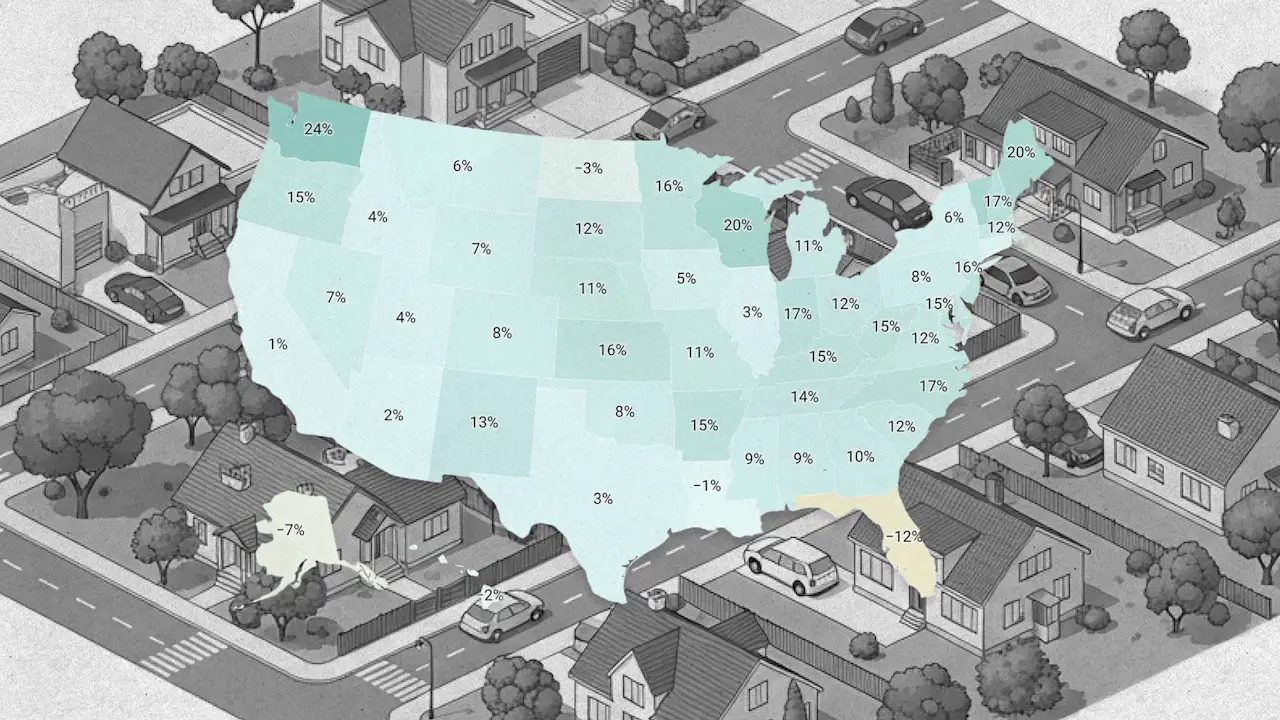
Despite the deceleration, the national total of 1,002,935 homes for sale remains 11.8% below pre-pandemic April 2019 levels. The cooling pace suggests that the shift in power from sellers to buyers—which has been underway since 2022—may be nearing a plateau.
Lance Lambert, founder of ResiClub, said: The national market is no longer swinging decisively in one direction. But when you drill down into individual states, you see a stark divide—some markets have inventory surging past 2019 levels, while others are still starved for supply.
State-by-State: Where Buyers and Sellers Hold the Upper Hand
Generally, local markets where active listings have climbed above pre-pandemic 2019 levels have seen softer home price growth—or outright declines—over the past 47 months. Conversely, states where inventory remains far below 2019 levels have experienced more resilient price appreciation.
The data reveals a clear regional split. States in the Sun Belt, such as Florida and Texas, have posted inventories above 2019 averages in many metro areas, giving buyers more leverage. In contrast, much of the Midwest and Northeast, including Ohio and New York, still face acute shortages that empower sellers.
ResiClub analyst Sarah Chen noted: In the tightest markets, sellers are still commanding premium prices despite higher mortgage rates. But in inventory-rich regions, price reductions are becoming more common.
Background: From Pandemic Boom to Power Shift
During the pandemic housing boom (2020–2022), active inventory plunged to historic lows—bottoming at around 380,000 homes in April 2022. Since then, supply has gradually recovered, but the pace has varied widely by location.
Many buyers and sellers are struggling to navigate this uneven landscape. The national aggregate masks deep disparities: while some regions have returned to something resembling a balanced market, others remain locked in a seller-friendly environment.
The shift has been incremental but persistent. ResiClub emphasizes that monitoring months of supply alongside active listings is critical to understanding pricing momentum.
What This Means for Homebuyers and Sellers
For buyers, the window of opportunity is brightest in states where inventory is back at or above pre-pandemic levels—typically in the South and parts of the West. These regions offer more negotiating power and less competition.
Sellers in the Midwest and Northeast can still expect strong demand and relatively rapid sales, but they must be cautious about overpricing as the national market cools. The key takeaway: market power is no longer a one-size-fits-all story—it depends heavily on location.
Looking ahead, if the current pace of inventory growth continues (about +43,684 homes per year), the national total could reach 1,046,619 by April 2027. But as Lambert warns, that’s not a prediction—just arithmetic. The real test will be how mortgage rates and economic confidence evolve.
Outlook: A Market That Demands Data, Not Headlines
The housing market is entering a new phase where national averages are less useful than local intelligence. Buyers and sellers alike should monitor their specific state and metro area trends before making moves.
As always, experts recommend consulting a local real estate agent who understands the nuances of inventory and pricing in your target area. The days of a monolithic housing market are over.