Earth’s magnetic field acts as a giant cosmic shield, trapping charged particles in a donut-shaped zone around our planet. This region, known as the ring current, plays a critical role in how Earth responds to space weather—disturbances from the Sun that can disrupt satellites and power grids. Yet scientists have long struggled to understand its behavior. Now NASA is launching the STORIE mission to provide an unprecedented view from the International Space Station. This listicle explores ten key things you need to know about STORIE and the ring current, from its basic nature to the mission’s goals and real-world impacts.
1. Earth’s Invisible Magnetic Shield
Our planet’s magnetic field acts like a powerful trap. It lures electrically charged particles—ions and electrons from the solar wind and Earth’s upper atmosphere—and corrals them in an invisible pen around Earth. This doughnut-shaped region, the ring current, overlaps the outer Van Allen radiation belt but contains far less energetic particles. The magnetic field lines guide these particles in spiral paths, creating a current that flows in opposite directions for positive and negative charges. This natural confinement is essential for understanding how energy flows between the Sun and Earth during solar storms.
2. The Ring Current: A Doughnut of Particles
Imagine a gigantic, invisible doughnut encircling Earth at altitudes from about 10,000 to 60,000 kilometers. That’s the ring current. It’s composed of low-energy charged particles—mainly hydrogen, helium, and oxygen ions—that drift in opposite directions depending on charge. The ring current grows and shrinks in response to solar activity, and its intensity can vary dramatically during geomagnetic storms. Despite its importance, scientists still lack a complete picture of how it forms, evolves, and dissipates, which is why missions like STORIE are so crucial.
3. Why the Ring Current Matters for Space Weather
Space weather—eruptions from the Sun that send charged particles racing toward Earth—can disrupt our technology. The ring current plays a central role: when it intensifies during a storm, it alters the magnetic field near Earth, inducing currents in power lines, pipelines, and even undersea cables. It can also cause satellites to build up static charges, leading to temporary glitches or permanent damage. Understanding the ring current’s dynamics helps forecasters predict space weather impacts and protect critical infrastructure.
4. NASA’s STORIE Mission: A Unique Perspective
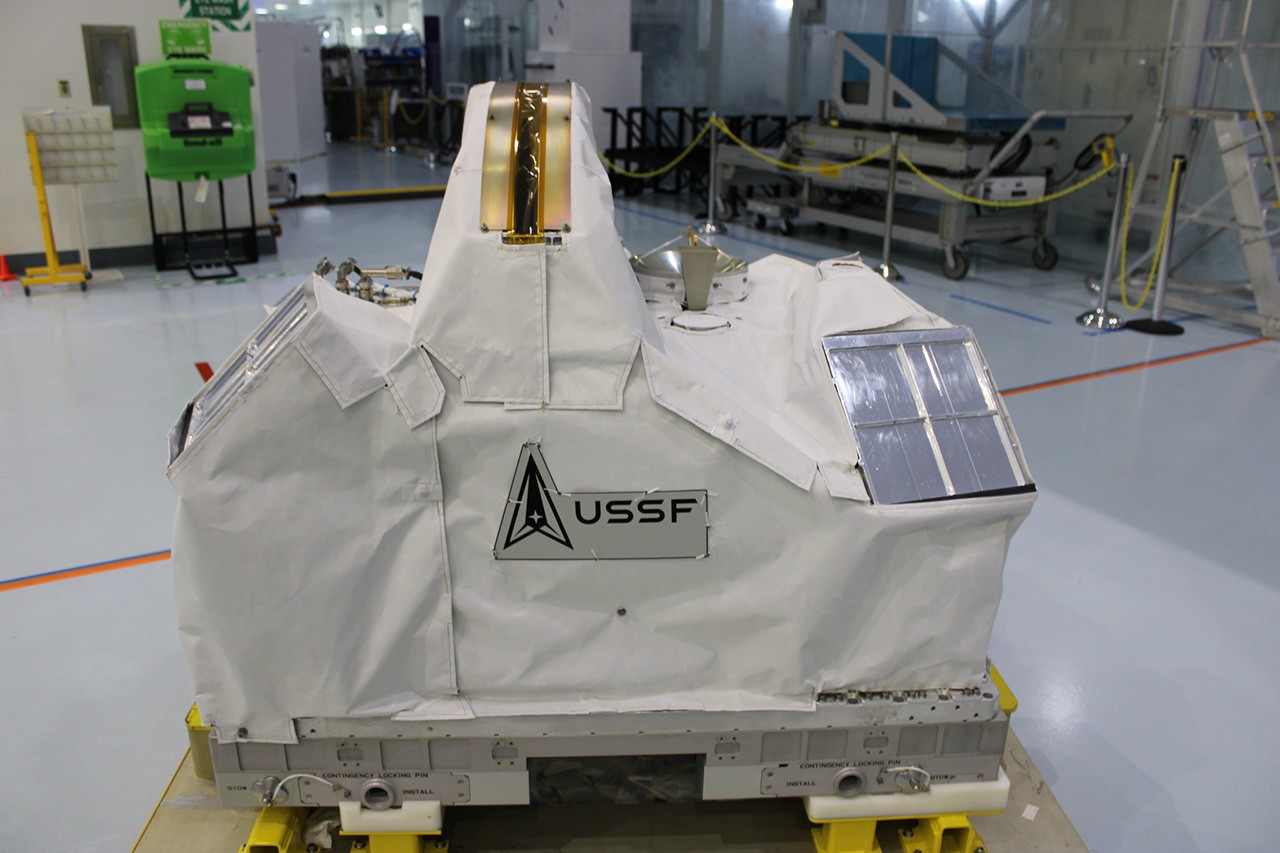
The Storm Time O+ Ring current Imaging Evolution (STORIE) mission is designed to provide an inside-out view of the ring current. Unlike previous missions that studied it from orbiting spacecraft or ground observatories, STORIE will be mounted on the exterior of the International Space Station (ISS). This vantage point allows it to look outward at the entire ring current in a way never before possible. By imaging the distribution of oxygen ions (O+), scientists hope to unlock secrets about how the ring current is built up and where its particles originate.
5. Launch and Installation on the ISS
STORIE is scheduled to launch in May as part of the 34th SpaceX commercial resupply services mission to the ISS. It will fly under the Space Test Program – Houston 11 (STP-H11) payload, a partnership between the U.S. Space Force and NASA. Once delivered, the instrument will be robotically installed on the station’s exterior, likely within a few days of arrival. This installation is a key milestone: the ISS platform offers power, data, and a stable observing location, but the environment of space requires careful handling to ensure the delicate sensors work correctly.
6. The Science Behind STORIE: Unraveling Mysteries
The primary scientific goal of STORIE is to answer long-standing questions about the ring current. How does it grow and shrink during geomagnetic storms? What determines its composition? And crucially, where do the trapped particles come from? The mission uses a special camera to detect low-energy oxygen ions, which are a major component of the ring current during storms. By imaging these ions from above, STORIE will provide the first global, time-resolved maps of the ring current’s structure and evolution. These data will help refine models of space weather and improve forecasts.
7. Particle Composition: Oxygen Ions Take Center Stage
While the ring current contains various ions, oxygen ions (O+) are of particular interest. They originate from Earth’s upper atmosphere and are energized during storms, then trapped in the ring current. Because O+ is heavier and more abundant at certain times, it alters the current’s strength and its effect on the magnetic field. STORIE’s name highlights this focus: the “O” stands for oxygen. By imaging O+ in different energy ranges, the mission can trace how the ring current taps into the atmosphere for its particle supply—a process still poorly understood.
8. The Ring Current vs. Van Allen Belts
Many people confuse the ring current with the Van Allen radiation belts. Both are regions of trapped charged particles, but they differ in energy and location. The Van Allen belts contain highly energetic electrons and protons, while the ring current has slower, lower-energy particles. During solar storms, the ring current fluctuates more dramatically than the belts, causing the stronger magnetic disturbances. The ring current also overlaps the outer Van Allen belt, but its behavior and origins are distinct. STORIE will help clarify these differences and interactions.
9. How Solar Storms Affect the Ring Current
When a coronal mass ejection from the Sun hits Earth, it compresses the magnetic field and injects huge numbers of particles into the ring current. This can cause the ring current to intensify rapidly, creating a magnetic storm that might last for days. The current’s shape can become asymmetric, with more particles on the night side than the day side. STORIE’s imaging capability will capture these changes in real time, showing how the ring current responds to different solar drivers. This knowledge is vital for predicting the severity of space weather events.
10. Protecting Our Technology from Ring Current Effects
The practical implications of ring current research are significant. During intense storms, induced ground currents can damage power transformers and cause blackouts. Satellites can experience anomalous charging, leading to system resets or failures. STORIE’s data will improve space weather models, giving operators earlier warnings. Governments and companies rely on such forecasts to safeguard electricity grids, communications networks, and GPS systems. By understanding the ring current, we can better protect the technology that underpins modern life.
The STORIE mission promises a major leap in our understanding of the ring current and its role in space weather. By combining a unique vantage point from the ISS with advanced imaging technology, NASA scientists will finally be able to see this invisible structure evolve in real time. As we look forward to its launch, the insights gained will help us prepare for the solar storms that affect our technological world—from power grids to orbiting satellites.