Introduction: The Need for Safety in High-Speed Development
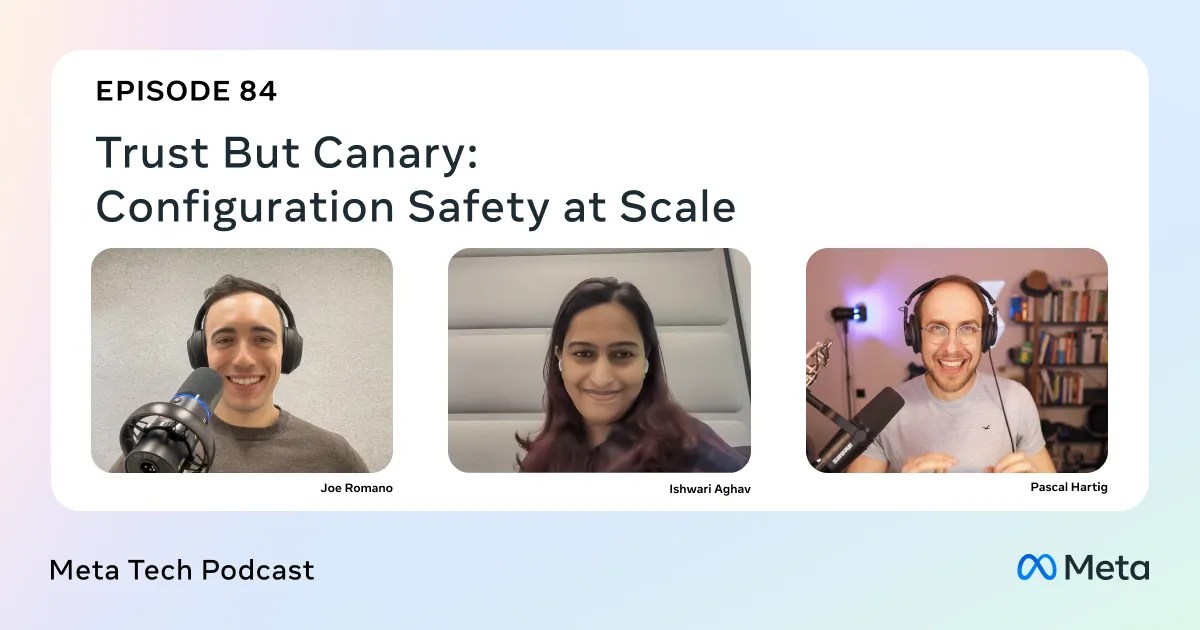
As artificial intelligence accelerates software development, the need for robust safety measures becomes paramount. In a recent episode of the Meta Tech Podcast, host Pascal Hartig spoke with Ishwari and Joe from Meta's Configurations team about how the company ensures configuration rollouts remain safe at massive scale. This article distills their insights into canary testing, progressive rollouts, health checks, and the growing role of AI and machine learning in minimizing risks.
What Is Configuration Safety at Scale?
Configuration changes—altering settings, flags, or parameters in production systems—are routine at Meta. Yet even a minor misconfiguration can cascade into widespread outages. To prevent this, the team follows a principle of trust but verify, implementing layered safeguards.
The Pillars of Safe Rollouts
- Canary Deployments: Rolling out changes to a small subset of users first.
- Progressive Rollouts: Gradually increasing the audience over time.
- Health Monitoring: Real-time signals to catch regressions.
- Incident Reviews: Blameless postmortems focused on system improvements.
Canarying and Progressive Rollouts
In the podcast, Ishwari explained that canary deployments serve as an early warning system. A new configuration is released to a tiny fraction of servers or users. Automated health checks—such as error rates, latency spikes, and uptime—are compared against baseline metrics. Only when these signals remain green does the rollout proceed.
Progressive rollouts then scale incrementally, often in 10% steps. Each stage pauses for a configurable observation period to detect delayed effects. Joe noted that this method reduces blast radius and allows engineers to react before problems become widespread.
Health Checks and Monitoring Signals
Meta’s monitoring infrastructure collects thousands of metrics per second. Key signals include:
- Error rate (e.g., HTTP 5xx responses)
- Latency (p50, p95, p99)
- Throughput (requests per second)
- Resource usage (CPU, memory, disk I/O)
These are aggregated per configuration tag, enabling quick correlation between a change and a degradation. Ishwari emphasized that effective monitoring must be both granular and holistic—nothing escapes unnoticed.
Using AI/ML to Slash Alert Noise
One of the biggest challenges the team faced was alert fatigue. With thousands of signals, false positives were overwhelming. Joe described how they applied machine learning models to distinguish genuine anomalies from benign variations. The system learns typical traffic patterns and raises alerts only when deviations exceed statistical thresholds.

Furthermore, AI assists in bisecting—pinpointing which configuration change caused a regression. By analyzing time series data and correlating it with deployment history, the tool reduces the search space from hundreds of changes to a handful, speeding up resolution times dramatically.
Blameless Incident Reviews
A critical part of Meta’s culture is the blameless postmortem. When an incident occurs, the team focuses on system weaknesses, not human error. Ishwari explained that each review produces actionable improvements: better automation, more robust canary checks, or updated documentation. This loop continuously tightens safety nets.
Conclusion: A Framework for Any Scale
Configuration safety at Meta is built on trust but verify, enabled by canaries, progressive rollouts, intelligent monitoring, and data-driven incident reviews. As developer speed increases with AI tools, these practices become even more essential. By sharing their approach, the Meta team hopes to inspire other organizations to adopt similar safeguards.
For more details, listen to the full episode of Meta Tech Podcast on Spotify, Apple Podcasts, or Pocket Casts. Follow Meta Engineering on Instagram, Threads, or X.
This article is based on the Meta Tech Podcast episode “Trust But Canary: Configuration Safety at Scale” by Meta Engineering. You can find career opportunities at Meta Careers.