Introduction
In its latest quarterly report to shareholders, Tesla tantalizingly mentions "robots" three times, with two references appearing in the dedicated Robotics section. The most striking revelation: preparations for a first large-scale Optimus factory will begin in the second quarter of 2024, with a first-generation production line designed to churn out 1 million humanoid robots annually—a line that will replace the existing Model S and Model X manufacturing capacity. This ambitious target raises a pressing question: who exactly will buy a million humanoid robots each year?
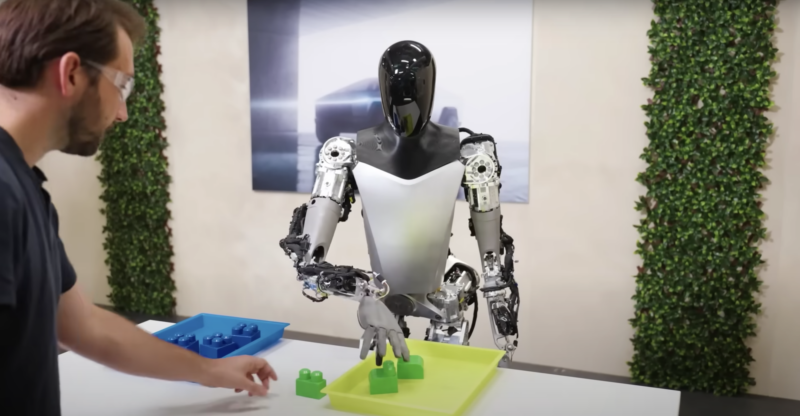
The Ambitious Production Goal
Tesla's decision to repurpose its premium car assembly lines for robot production signals a seismic shift. The company envisions the Optimus robot—a general-purpose, bipedal humanoid—as a platform that can tackle repetitive, dangerous, or dull tasks across multiple industries. But hitting a million units per year requires a customer base as vast as the automotive market itself. Let's explore the likely buyers.
Optimus Factory Preparations
According to the shareholder update, Tesla is already laying groundwork: "Preparations for our first large-scale Optimus factory will start shortly in Q2." The first-generation line is designed for 1 million robots a year and will replace the Model S and Model X production lines. This suggests Tesla is betting that humanoid robots can achieve the same economies of scale as electric vehicles.
Who Will Buy a Million Humanoid Robots a Year?
Industrial and Manufacturing Sectors
The most immediate and obvious market is heavy industry. Car factories, electronics assembly plants, and metal fabrication facilities already use robotic arms, but Optimus offers a flexible, mobile alternative that can walk between stations, climb stairs, and operate tools designed for humans. A single humanoid can replace multiple specialized bots—or even entire teams of human workers—in tasks like welding, painting, and quality inspection. With labor shortages worsening in manufacturing hubs like China, Germany, and the U.S. Midwest, companies will be eager to adopt humanoid workers that don't need breaks, overtime pay, or health insurance.
Logistics and Warehousing
Amazon, Walmart, FedEx, and DHL operate massive warehouses where robots already handle sorting and moving goods. But most existing robots are wheeled or fixed-gantry systems that struggle with irregular layouts. Optimus, with its bipedal design, can navigate stairwells, load trucks, and pick items from high shelves. The global warehousing and logistics market employs tens of millions of workers; replacing even a fraction with humanoids would consume hundreds of thousands of units annually.
Healthcare and Elderly Care
An aging population in developed countries—Japan, Italy, South Korea—is creating a desperate need for caregivers. Humanoid robots can assist with lifting patients, dispensing medication, cleaning rooms, and providing companionship. While regulatory hurdles exist, the long-term potential is enormous. One analyst estimates the eldercare robot market could reach 500,000 units per year by 2030.
Domestic Service and Companionship
Tesla might eventually sell Optimus to households as a general-purpose helper—cleaning, cooking, gardening, and even entertaining. However, the high cost (likely tens of thousands of dollars initially) limits near-term adoption to luxury buyers or property developers equipping smart homes. Still, if Tesla can drive costs down to $20,000 or less, a million units per year for domestic use becomes plausible.
Challenges and Market Realities
Skeptics point out that building a million humanoid robots a year requires mature supply chains, robust software, and regulatory approvals. Humanoid robots are far more complex than cars: they must balance, perceive environments, and manipulate objects with human-like dexterity. Tesla has not yet demonstrated a production-ready version that can operate reliably for 8-hour shifts. Moreover, potential customers—especially in safety-sensitive industries like construction—will demand rigorous certifications.
Yet Tesla has a track record of scaling manufacturing rapidly. The company went from zero to 1.8 million cars per year in just a decade. If Optimus follows a similar trajectory, the first million robots could find buyers among early adopters in factories and warehouses, with subsequent generations expanding into new markets.
Tesla's Strategy and Long-Term Vision
Tesla's master plan for Optimus is not just to sell hardware but to create a robotics-as-a-service ecosystem. Much like its Full Self-Driving software, the company could offer monthly subscriptions for robot fleets, providing updates and maintenance. This model would make robots more accessible to small businesses while generating recurring revenue for Tesla.
Additionally, producing 1 million robots a year drives economies of scale, reducing unit costs and opening even larger markets. CEO Elon Musk has previously stated that Optimus could eventually make Tesla a $30 trillion company. While that vision is wildly optimistic, it underscores the scale of Tesla's ambition.
Conclusion
So, who is Tesla selling 1 million humanoid robots a year to? The answer is a diverse mix of industrial giants, logistics operators, healthcare providers, and, ultimately, households. The first million will likely go to factories and warehouses where labor shortages and safety concerns make robot workers cost-effective. As prices fall and capabilities improve, the customer base will broaden. Tesla's plan is audacious, but if any company can pull it off, it's the one that revolutionized electric vehicles and now aims to bring humanoid robots to the masses.