Introduction
NASA's Psyche spacecraft is on a historic journey to the metal-rich asteroid 16 Psyche, but its recent flyby of Mars might seem like an unexpected detour. In reality, this maneuver is a masterclass in celestial mechanics—a gravity assist designed to save fuel, gain speed, and optimize the trajectory for a deep-space mission. Why visit Mars when the destination is an asteroid in the main belt? Let's uncover the science behind this strategic pit stop.
The Psyche Mission: A Quick Overview
Launched in October 2023, the Psyche mission aims to explore 16 Psyche, a unique asteroid composed largely of metal—possibly the exposed core of a protoplanet. Studying it could offer clues about the building blocks of planet formation. The spacecraft is equipped with scientific instruments to map the asteroid's composition, gravity field, and magnetic properties. But getting there requires careful navigation across the solar system.
The Mars Flyby: A Surprising Detour
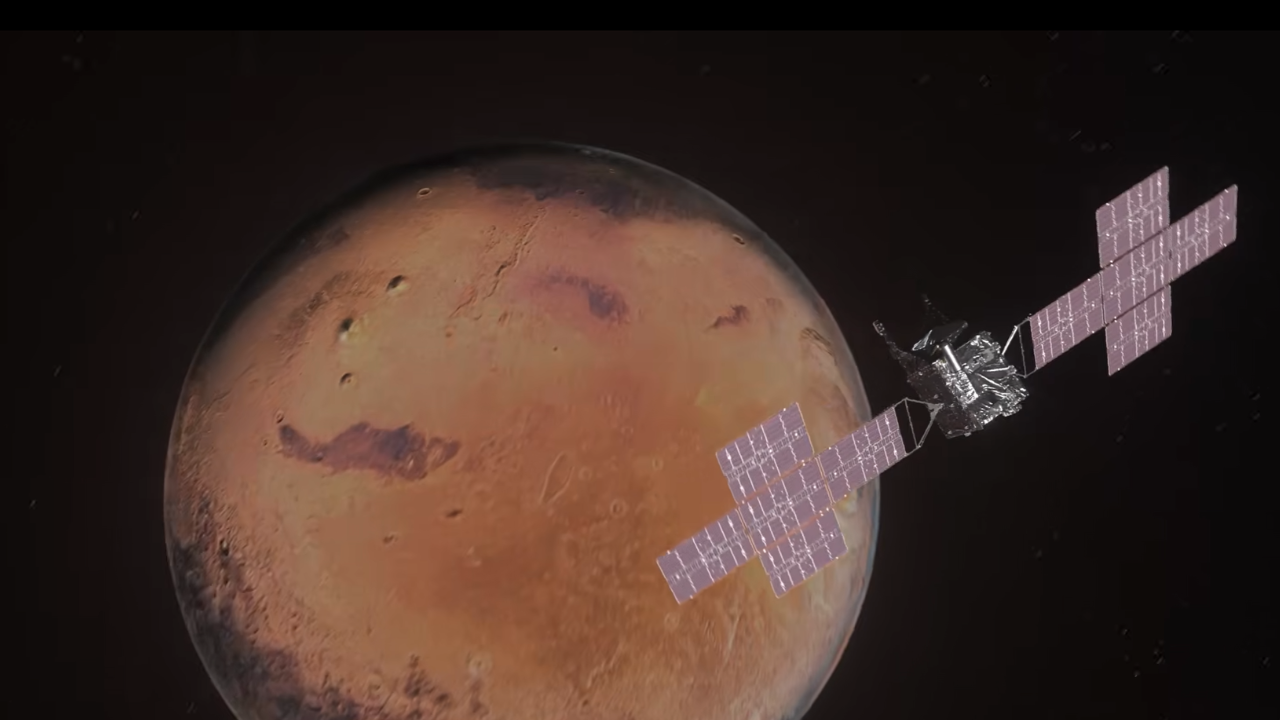
In May 2024, Psyche performed a flyby of Mars, coming within about 1,000 kilometers of the Martian surface. This was not a sightseeing stop—it was a calculated maneuver. The spacecraft used Mars's gravity to bend its path and increase its velocity relative to the Sun. Without this assist, Psyche would have needed additional propellant and a longer trip time to reach its target.
How Gravity Assists Work
A gravity assist, also known as a slingshot maneuver, uses the gravitational pull of a planet to alter a spacecraft's trajectory and speed. As the spacecraft approaches the planet, it is drawn in by gravity, then swings around the planet and exits with a change in momentum. The effect is akin to a gravitational tug that can increase or decrease the spacecraft's speed relative to the Sun, depending on the geometry. This technique conserves propellant because the planet does the work, not the spacecraft's engines.
Why Not a Direct Route?
Some might wonder why NASA didn't send Psyche directly to 16 Psyche. The answer lies in fuel efficiency and launch window constraints. A direct trajectory would require immense thrust and propellant, increasing costs and mass. Gravity assists allow missions to piggyback on planetary motion, enabling spacecraft to reach far-off destinations with minimal fuel. For Psyche, the Mars flyby also served to adjust its trajectory for an optimal arrival at the asteroid in 2029.
Benefits of Gravity Assists
- Fuel savings: Reduces the amount of propellant needed, lowering launch mass and mission cost.
- Speed boost: Increases spacecraft velocity without burning extra fuel.
- Trajectory flexibility: Allows mission planners to fine-tune paths using planetary alignments.
- Extended mission life: More fuel can be reserved for scientific operations rather than propulsion.
Gravity assists have been used by numerous missions, such as Voyager, Cassini, and New Horizons, to explore the outer planets and beyond.
Future Implications for Deep Space Travel
The success of Psyche's Mars flyby demonstrates the continued importance of gravity assist navigation for deep space exploration. As missions aim for Mars, the outer planets, and even asteroids, these maneuvers will become even more critical. The technique also opens possibilities for human missions that require efficient travel to Mars and beyond.
Conclusion
NASA's Psyche spacecraft may have taken a detour to Mars, but that detour is a brilliant example of spacecraft engineering and astrodynamics. By harnessing the gravitational pull of Mars, the mission saves fuel, gains speed, and stays on course for the metal asteroid 16 Psyche. The flyby is not a random visit—it's a precise science that propels humanity's quest to understand the solar system.
To learn more about the mission, visit the official Psyche mission page or read about how gravity assists work in our detailed section above.