Pushing the Limits of Martian Flight
In a milestone for aerial exploration of the Red Planet, NASA has successfully tested next-generation helicopter blades that can withstand speeds exceeding the sound barrier—without breaking apart. The tests, conducted at the Jet Propulsion Laboratory (JPL) in Southern California, demonstrate a critical step toward future Mars aircraft capable of flying faster and farther than ever before.
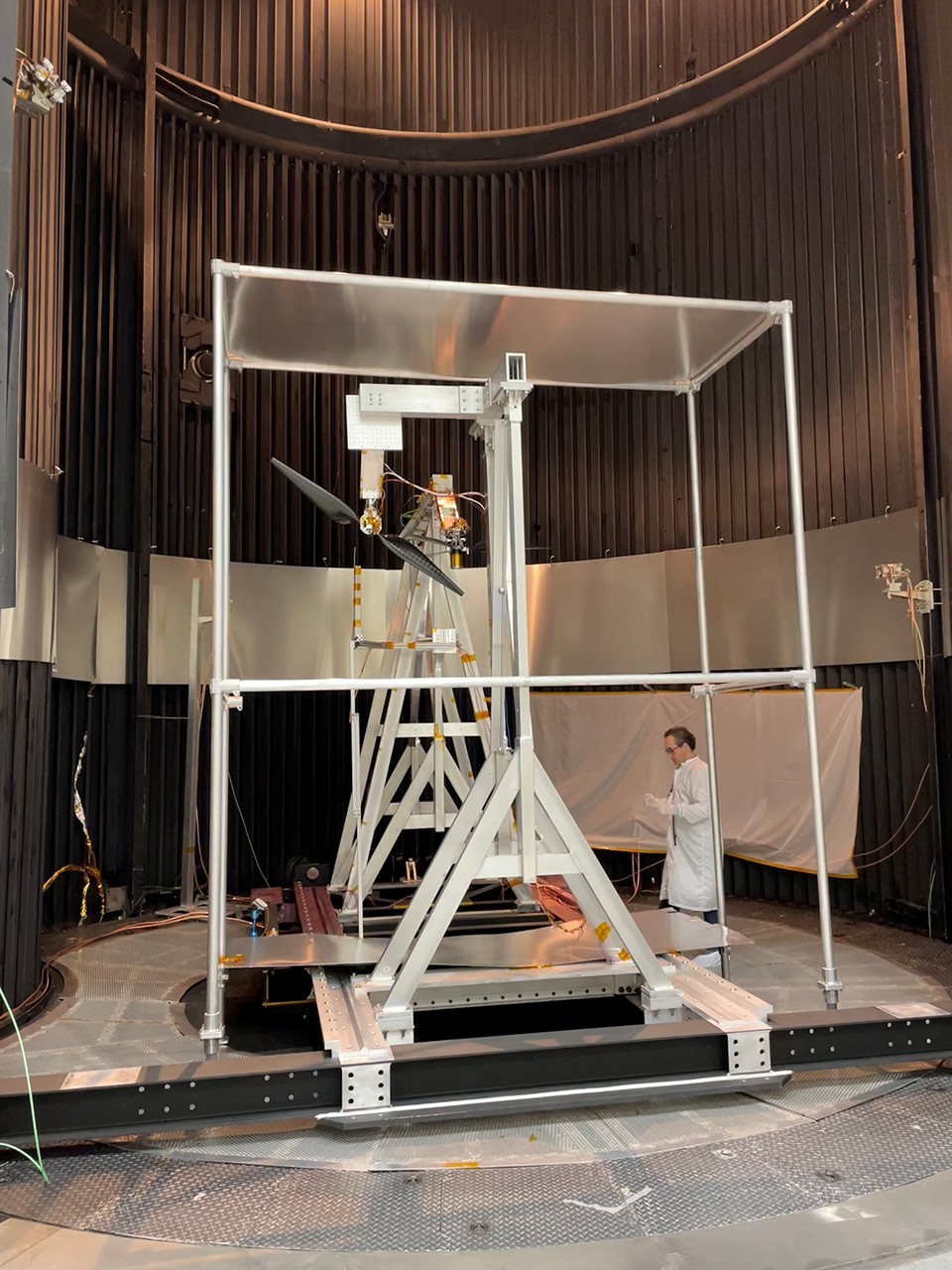
The experiments took place inside the 25-Foot Space Simulator, a vacuum chamber that mimics the thin atmosphere of Mars. Engineer Fernando Mier-Hicks oversaw the test stand, which spun specially designed rotors at increasingly high velocities. Data confirmed that the blades could reach supersonic speeds—faster than Mach 1 on Mars—without suffering structural failure.
How the Tests Were Conducted
The Challenge of Mars' Thin Atmosphere
Mars has only about 1% of Earth's atmospheric density. To generate lift, helicopter blades must spin much faster than on Earth. However, high rotational speeds bring the risk of compressibility effects, where air near the blade tips approaches the speed of sound, creating shock waves that can destabilize the rotor. The new blade design was built to tolerate these extreme conditions.
Inside the 25-Foot Space Simulator
The test facility at JPL is large enough to accommodate full-size rotor systems. Engineers evacuated the chamber to Martian atmospheric pressure, then accelerated the blades to speeds well beyond those used by the Ingenuity helicopter. A suite of sensors monitored vibration, strain, and aerodynamic forces in real time. The results showed that the rotors remained intact and stable even past Mach 1.
Building on Ingenuity's Success
Ingenuity, the first powered aircraft to fly on another world, proved that controlled flight on Mars is possible. However, its small size and limited power restrict its range and speed. The new blade tests aim to enable next-generation Mars helicopters that can carry science instruments, scout terrain, or even assist future sample-return missions.

“These tests push the envelope of what’s possible for Mars aviation,” said a JPL spokesperson. “By demonstrating supersonic rotor capability, we open the door to vehicles that can cover more ground in less time.”
Funding and Next Steps
The test campaign was funded by NASA’s Mars Exploration Program, which oversees a portfolio of missions to understand the planet's geology, climate, and potential for life. JPL, a division of Caltech, manages the program for NASA’s Science Mission Directorate in Washington.
Future work will focus on integrating these blades into full helicopter prototypes and testing them in realistic flight conditions. Engineers also plan to refine the blade materials and shape to further improve efficiency. The ultimate goal is a fleet of advanced rotorcraft that can support human exploration or operate autonomously across vast Martian landscapes.
A Supersonic Leap for Mars Aviation
The successful supersonic tests mark a turning point in off-world aircraft design. With rotors that can survive Mach 1, NASA is one step closer to helicopters that can zip across Mars at unprecedented speeds, capturing details and samples that would take rovers months to reach. As the agency prepares for more ambitious missions, the lessons from these tests will echo in the thin Martian air for years to come.